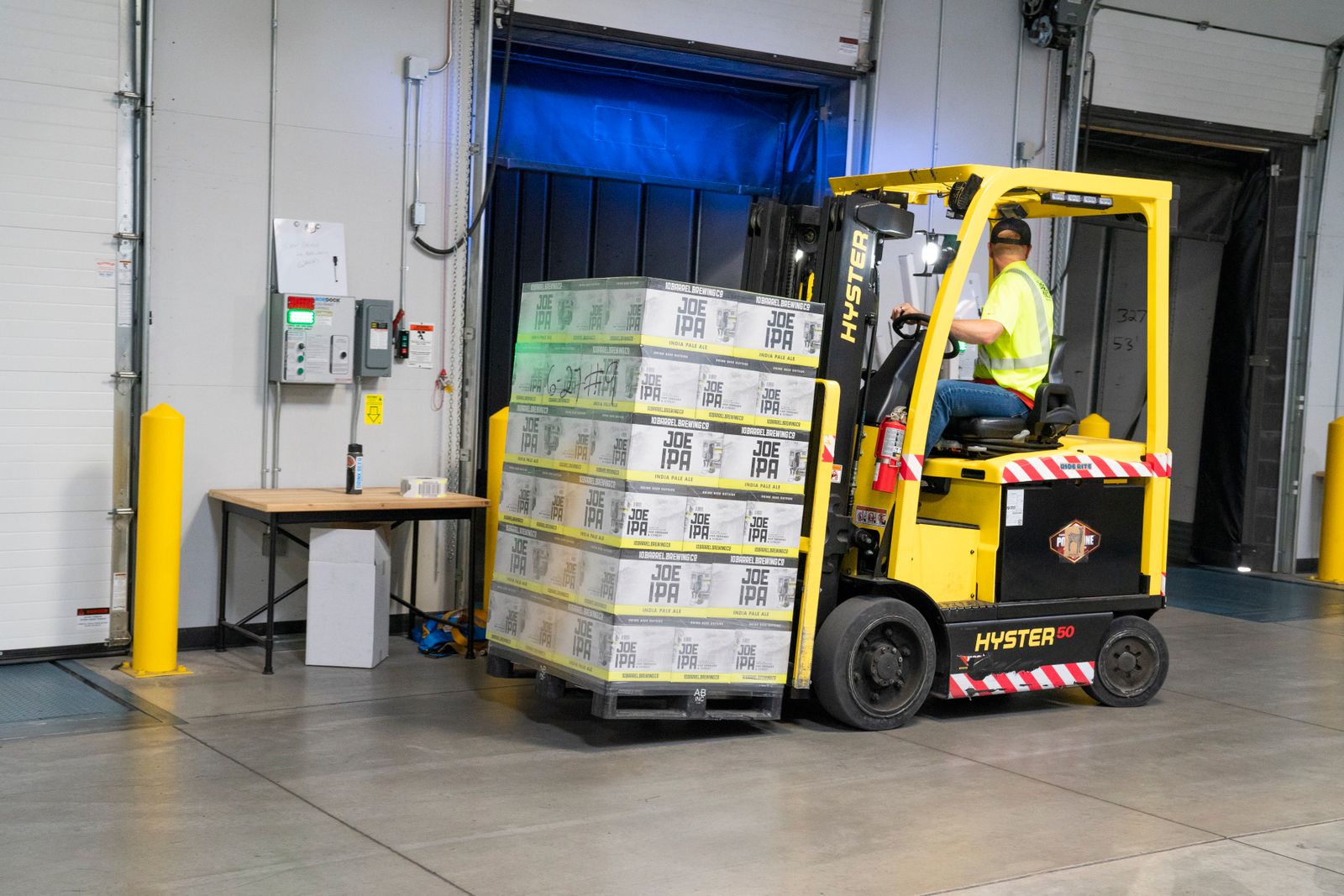
Ask any warehouse manager what happens when pallets run out, and you will get the same answer: everything slows down. Receiving stalls, outbound shipments miss their windows, forklift drivers wait, and someone starts making frantic phone calls to find pallets fast. The cost of a pallet shortage is never just the pallet — it is the disruption that ripples through the entire operation.
Yet many businesses treat pallet sourcing as a transaction rather than a program. They order when they run low, compare prices each time, and switch suppliers whenever a quote comes in a few cents cheaper. That approach works until it does not. This guide is about a different approach: building a reliable pallet supply program that keeps your Central Florida warehouse running without interruptions.
Why Pallet Consistency Matters to Warehouse Operations
Pallets are not interchangeable commodities. A 48x40 pallet from one supplier can have different stringer dimensions, board thickness, moisture content, and load capacity than a 48x40 pallet from another. When your operation runs on automated handling systems, racking, or tight trailer loading patterns, those variations create real problems.
Inconsistent pallets cause:
- Forklift jams when pallet dimensions vary by even half an inch
- Rack instability when pallets do not seat properly in selective or drive-in racking
- Trailer loading inefficiencies when pallets do not stack predictably
- Product damage when pallets with different load ratings are mixed in the same load
- Wrap machine adjustments when pallet heights vary from load to load
A reliable supply program starts with specifying the pallet you need and getting that same pallet every time — not whatever happens to be in stock that week.
The Cost of Unreliable Pallet Supply
Unreliable pallet supply is more expensive than most businesses realize because the costs are hidden in operational disruptions rather than line-item invoices. When pallets arrive late, your team absorbs the cost of idle labor, delayed shipments, and emergency sourcing. When pallets arrive in the wrong condition, you pay for it in product damage, rejected loads, and customer complaints.
The most common symptoms of an unreliable pallet supply include:
- Rush orders that cost 20-40% more than planned purchases
- Production line stoppages when outbound shipping pallets are not available
- Inconsistent pallet quality that forces your team to sort and reject pallets on the dock
- Missed delivery windows when pallets are not ready for loading
- Over-ordering to create a safety buffer, which ties up warehouse space and capital
Over a year, these costs add up to far more than the per-pallet price difference between a reliable supplier and the cheapest available source.
Forecasting Your Recurring Pallet Needs
A pallet supply program starts with understanding your actual consumption. Most warehouses know their average daily or weekly pallet usage, but fewer have a clear picture of how that usage fluctuates throughout the year.
To forecast effectively, track:
- Baseline consumption — the pallets you use in a typical week with normal throughput
- Seasonal peaks — when demand rises and by how much (holiday retail, harvest season, peak distribution periods)
- Growth trajectory — whether your operation is expanding and how that affects pallet volume
- Pallet type mix — what percentage of your pallets need to be new, used, recycled, custom, or heat-treated
- Loss and damage rate — how many pallets leave your operation one-way vs. how many stay in rotation
With that data, you can set up a recurring delivery schedule that keeps inventory available without overstocking. If you need help calculating how many pallets your operation actually uses — including baseline demand, buffer stock, and loss rates — see our guide to planning pallet inventory before setting up a delivery cadence. A supplier that understands your volume patterns can help you plan delivery cadence — weekly, biweekly, or on-demand — that matches how your operation actually runs.
New vs. Used vs. Recycled Pallets for Recurring Operations
Most warehouses use a mix of pallet types rather than a single option. The right mix depends on where each pallet type is used in your operation.
New pallets provide the highest consistency, cleanest appearance, and most predictable load ratings. They are the right choice for customer-facing shipments, automated handling systems, and any application where dimensional precision matters.
Used pallets offer the lowest practical cost for one-way shipping, temporary staging, and operations where appearance is secondary. They are not graded or repaired, so dimensional consistency is lower than new or recycled stock.
Recycled pallets are repaired, reconditioned, and graded (typically A-grade or B-grade). They provide a middle ground — more consistent than used pallets, more affordable than new — making them the workhorse for many high-volume Florida warehouses and distribution centers.
A well-designed supply program often uses recycled pallets for internal movement and general domestic shipping, new pallets for customer-facing or automated applications, and used pallets for one-way freight. Your supplier should be able to provide all three so you are not forced to compromise.
Why Specifications Matter Beyond Size
Specifying a 48x40 pallet is a starting point, not a specification. Two 48x40 pallets can perform very differently depending on construction. For a reliable supply program, document the pallet you need in detail.
For a deeper look at why the 48x40 footprint became the industry standard and what GMA-style construction means, see our guide to 48x40 pallets for Florida warehouses. But when your operation needs something other than a standard 48x40 — whether due to product dimensions, load weight, or handling requirements — custom pallets built to your exact specifications are the right answer rather than forcing your products onto a pallet that does not fit.
Key specifications to document include:
- Exact dimensions (length, width, and height)
- Stringer or block construction
- Lumber type (southern yellow pine, hardwood, or mixed)
- Board thickness and count
- Load capacity (dynamic, static, and racking if applicable)
- Condition (new, used, or recycled with grade)
- Whether heat treatment is required for any export shipments
Build Your Pallet Supply Program with W W Pallets
We supply new, used, recycled, custom, and heat-treated pallets from our Plant City yard with recurring delivery throughout Tampa, Lakeland, and Central Florida. Call (813) 707-8474 or request a quote to set up a delivery schedule that matches your operation.
Delivery Scheduling and Supplier Proximity
For a warehouse running on tight schedules, delivery reliability is as important as pallet quality. A supplier that is close to your facility can deliver faster, respond to changes more quickly, and keep freight costs lower than a distant source.
W W Pallets is based in Plant City, positioned directly on the I-4 corridor between Tampa and Lakeland. That location means we can deliver pallets to warehouses and distribution centers across the Tampa Bay area and Polk County on short notice, and set up recurring delivery schedules that keep inventory flowing without overstocking.
When evaluating a pallet supplier for a recurring program, ask about:
- Delivery radius and typical lead times
- Ability to schedule recurring deliveries (weekly, biweekly, or custom)
- Whether they deliver on their own trucks or use third-party freight
- Minimum order quantities for delivery vs. pickup
- Ability to handle volume spikes or emergency orders
A supplier that delivers on its own trucks from a nearby yard has far more control over timing than one that brokers freight from a distant warehouse.
Planning for Volume Spikes and Seasonal Demand
Most warehouses experience periods when pallet demand jumps — holiday retail peaks, agricultural harvest seasons, contract wins, or unexpected surges in order volume. A reliable supply program accounts for these spikes before they happen.
Work with your supplier to plan for seasonal demand by:
- Sharing your forecast so the supplier can pre-stage inventory
- Setting up a flexible delivery schedule that can scale up during peak periods
- Confirming in advance that your supplier can handle a 2x or 3x volume increase without lead time extensions
- Building a safety buffer into your storage plan so a one-week delivery delay does not stop your line
The worst time to find out your supplier cannot handle a volume spike is when you are already in one. A supplier relationship built in advance — with clear communication about your expected volumes — means your supplier is ready when you need them.
When Heat-Treated Pallets Are Required
If any portion of your operation ships internationally, your pallet supply program needs to account for ISPM-15 compliance. Heat-treated pallets are required for export shipments, and they must be stamped with the official IPPC compliance mark. If your warehouse handles both domestic and international freight, your supply program should include heat-treated pallets as a separate category — ordered specifically for export loads, with treatment and stamping confirmed before delivery.
The Value of a Supplier Relationship Over Per-Order Price Shopping
W W Pallets is built on reliability and driven by relationships. That philosophy reflects how pallet supply actually works in a real warehouse environment. The cheapest pallet on any given day rarely produces the lowest total cost over a year of operations.
An ongoing supplier relationship provides value that transactional purchasing cannot:
- Consistent specifications — you get the same pallet every time, not whatever is cheapest this week
- Priority delivery — a supplier that knows your operation can prioritize your orders during tight windows
- Volume planning support — your supplier can pre-stage inventory based on your forecast
- Responsive communication — when you need to change an order or add a delivery, a supplier that knows you responds faster
- Quality consistency — a supplier invested in the relationship maintains quality standards because they want to keep your business
For a warehouse or distribution center that depends on steady pallet availability, the question is not whether you can save 50 cents per pallet by shopping around. It is whether your supplier will have the right pallets, in the right quantity, at your dock when you need them. That is what a supply program delivers.
Setting Up Your Pallet Supply Program
Building a reliable pallet supply program starts with a conversation. Tell your supplier what your operation needs — pallet types, volumes, delivery schedule, seasonal patterns, and any special requirements like heat treatment or custom dimensions. A supplier that understands your operation can recommend the right pallet mix, set up a recurring delivery schedule, and plan for your volume spikes before they happen.
For warehouses and distribution centers in Plant City, Tampa, Lakeland, and across Central Florida, W W Pallets provides new, used, recycled, custom, and heat-treated pallets with recurring delivery from our own trucks. Call (813) 707-8474 or request a quote online with your pallet types, volumes, and delivery location, and we will help you build a supply program that keeps your operation running.