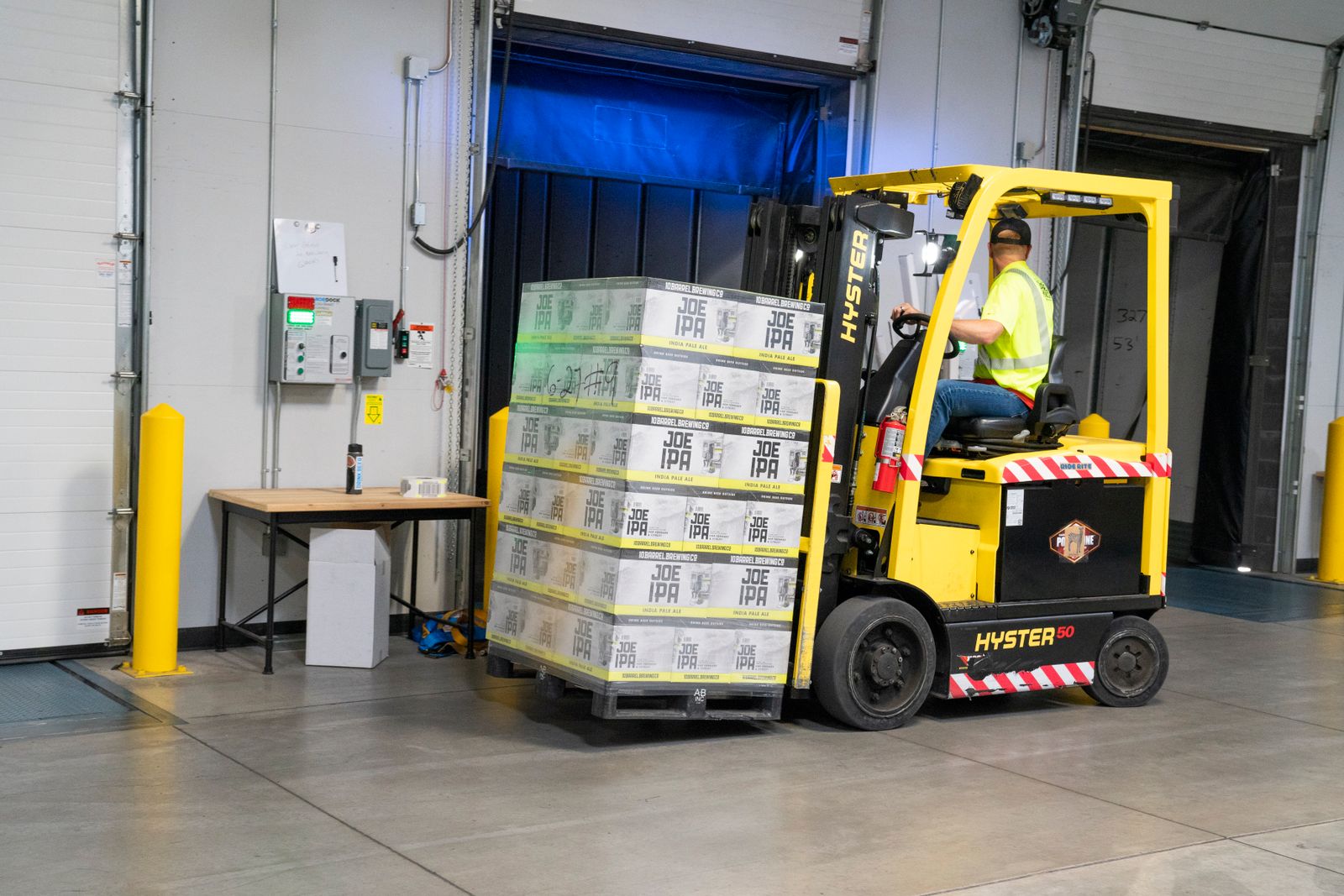
Running out of pallets is one of the most preventable problems a warehouse or shipping operation can face. Yet it happens constantly — a distribution center underestimates seasonal demand, a manufacturer forgets to account for pallets that leave the facility and never come back, or a purchasing team orders based on last quarter's numbers instead of this quarter's trajectory. The result is always the same: receiving stalls, outbound shipments miss their windows, and someone is on the phone trying to source pallets at a premium.
The flip side is just as costly. Over-ordering ties up warehouse space, blocks capital, and creates congestion that slows down every part of your operation. Pallets sitting in a corner for three weeks are not inventory — they are an obstacle.
This guide walks through how to estimate pallet usage, set a practical buffer, account for losses, and plan a supply rhythm that keeps your operation running without overstocking. It is written for warehouse managers, operations managers, and purchasing teams who buy pallets regularly and want to stop reacting to shortages.
Start with Baseline Pallet Usage
Before you can plan inventory, you need to know how many pallets your operation actually uses. Not the number you think you use — the real number, measured over a representative period.
Pull data from the past 8 to 12 weeks. If your operation has strong seasonal swings, look at a full year so you can identify both your baseline and your peaks. Track:
- Inbound pallets — pallets arriving with raw materials or inbound freight
- Outbound pallets — pallets loaded with finished goods and shipped out
- Internal transfers — pallets used to move product between departments, staging areas, or storage zones
- One-way vs. returnable — which pallets leave the facility and which stay in rotation
Most operations focus on outbound pallets and undercount the rest. But if your receiving team is pulling 50 pallets a week off inbound freight and reusing them for outbound shipments, that flow is part of your inventory calculation. If you ignore it, you will over-order.
Calculate Your Average Weekly and Monthly Demand
Once you have your usage data, calculate the average. Start with weekly demand — divide total pallets used over your measurement period by the number of weeks. Then multiply by 4.3 to get average monthly demand.
For example, if your operation used 1,200 pallets over 8 weeks:
- Weekly average: 1,200 ÷ 8 = 150 pallets per week
- Monthly average: 150 × 4.3 = approximately 645 pallets per month
That weekly average is your baseline. It is the number you need to keep available under normal operating conditions. But baseline alone is not enough — you also need to account for the variability that real operations face.
Account for Peak and Seasonal Demand
Few businesses use pallets at a perfectly flat rate. Seasonal peaks, promotional periods, contract wins, and holiday shipping windows all push demand above baseline. If your pallet plan only covers average usage, you will run short during the weeks that matter most.
Review your usage data for the highest-demand weeks in your measurement period. Calculate the peak as a percentage above baseline. If your baseline is 150 pallets per week and your peak week was 220, your peak demand is roughly 47% above baseline.
Use that percentage to plan for future peaks. If you know your busy season runs for 6 weeks, calculate how many additional pallets you need above baseline for that period, and make sure your supplier can cover the increase.
Build in Buffer Stock
Buffer stock — sometimes called safety stock — is the extra pallets you keep on hand to absorb unexpected demand spikes, supplier delays, or usage spikes you did not forecast. Without buffer stock, even a one-week delivery delay can stop your operation.
A common starting point is 1 to 2 weeks of baseline usage. If your baseline is 150 pallets per week, a one-week buffer is 150 pallets and a two-week buffer is 300. The right number depends on:
- Supplier lead time — if your supplier delivers in 48 hours, a one-week buffer may be sufficient. If lead times stretch to a week or more, plan for two
- Demand variability — operations with stable, predictable usage need less buffer than those with volatile or seasonal demand
- Storage capacity — buffer stock only works if you have space to store it without creating congestion
- Cost of a shortage — if running out stops a production line or delays a major shipment, carry more buffer
Buffer stock is not free. It occupies space and ties up capital. The goal is enough to cover realistic disruptions without stockpiling pallets you will not use for months.
Account for Pallets That Leave and Do Not Come Back
One of the biggest blind spots in pallet planning is loss. Pallets leave your facility on outbound shipments and never return. Some are one-way shipments by design. Others are supposed to come back but do not — customers hold them, freight carriers lose them, or they get damaged in transit and discarded on the other end.
Track your loss rate over time. If you ship 600 pallets outbound per month and 120 of those are one-way or never returned, your monthly replacement need is 120 pallets just to maintain current inventory levels — before accounting for growth.
Understanding your loss rate is essential because it determines how many used pallets or recycled pallets you need to bring in as replacements. If you ignore losses, your inventory shrinks every month until you hit a shortage.
Factor in Damaged Pallets
Pallets that stay in your facility still leave the rotation when they break. A pallet with a cracked stringer or split deck board is no longer usable until it is repaired or replaced. Track how many pallets your operation pulls from service each week due to damage.
Damaged pallets fall into two categories:
- Repairable — pallets with damage that can be fixed (replaced boards, re-nailed connections). These re-enter your inventory after repair
- Scrap — pallets too damaged to repair. These need to be replaced with new or recycled stock
If your operation generates 15 scrap pallets per week, that is 15 pallets of replacement supply you need each week just to hold steady. Over a month, that is roughly 65 pallets — a number that surprises many operations when they start tracking it.
Reusable and Returnable Pallets
Some operations use returnable pallets — pallets that circulate between your facility and your customers or partners on a recurring basis. If your operation uses returnable pallets, your replacement need is lower because those pallets come back into rotation. But returnable systems still have loss and damage rates, and they require tracking to ensure pallets actually return on schedule.
If you are evaluating whether returnable pallets make sense for your operation, consider whether your shipping partners reliably return them, how long the return cycle takes, and whether the cost of tracking and recovering pallets is worth the savings in replacement supply.
Supplier Lead Times and Emergency Orders
Your buffer stock calculation depends heavily on your supplier's lead time. If your pallet supplier can deliver within 24 to 48 hours, you can operate with a leaner buffer. If lead times stretch to a week or more, you need enough buffer to cover the gap.
Emergency orders — rush purchases made when you run out unexpectedly — are the most expensive way to buy pallets. They cost more per unit, they disrupt your supplier's schedule, and they often mean accepting whatever condition or size is available rather than what your operation actually needs. A pallet inventory plan that includes buffer stock and a recurring delivery schedule exists specifically to eliminate emergency orders.
For a broader look at building a structured approach to recurring supply, see our guide to building a reliable pallet supply program for your warehouse.
Storage Capacity Constraints
How many pallets you should keep on hand is not the same as how many you can keep on hand. Your warehouse has a finite amount of storage space, and pallets compete with product for that space.
When planning pallet inventory, consider:
- Where will buffer stock be stored without blocking aisles, docks, or staging areas?
- Can pallets be stored outdoors, or do they need to be kept inside for quality reasons?
- Will a large delivery create congestion that slows down receiving or shipping?
- Is it better to receive one large delivery or schedule smaller, more frequent drops?
If storage is tight, a recurring delivery schedule with smaller, more frequent drops may be more practical than a large buffer stock. Your supplier should be able to work with you on a cadence that fits your space.
New, Used, and Recycled Pallets in Your Inventory Mix
Most operations do not need just one pallet type. A practical inventory plan often includes a mix:
- New pallets for customer-facing shipments, automated handling systems, and applications where dimensional consistency is critical
- Used pallets for one-way shipping, temporary staging, and budget-conscious internal movement
- Recycled pallets for high-volume warehouse distribution where a balance of cost and consistency matters
Planning your inventory by pallet type — rather than treating all pallets as interchangeable — helps you match the right pallet to each use case and avoid spending more than necessary. For a detailed comparison of all three options, see our new vs. used vs. recycled pallets guide.
Why Consistent Specifications Matter
When you are planning pallet quantities, it is easy to focus on count and overlook specifications. But a pallet inventory plan only works if the pallets you receive match the pallets your operation depends on. A 48x40 pallet from one supplier can have different stringer dimensions, board thickness, or load capacity than a 48x40 from another.
If your operation runs automated handling systems, racking, or tight trailer loading patterns, inconsistent pallets create jams, instability, and product damage. Your inventory plan should specify not just how many pallets you need but exactly what pallet you need — dimensions, construction, lumber type, and condition. For a deeper look at why this footprint became the industry default, see our guide to 48x40 pallets for Florida warehouses.
Planning for Business Growth
If your operation is growing, your pallet plan needs to account for it. Ordering based on last quarter's usage when your volume is increasing 15% quarter over quarter guarantees a shortage.
Factor growth into your demand estimate. If your baseline is 150 pallets per week and you expect 10% growth over the next two quarters, plan for a baseline of 165 pallets per week within that timeframe. Share your growth projections with your supplier so they can scale their inventory to meet your increasing demand.
For operations in Central Florida, working with a local pallet supplier that can scale delivery volume as your operation grows is more sustainable than relying on a distant source that may not be able to increase capacity on short notice.
A Practical Example: Estimating Pallet Requirements
To illustrate how these factors come together, consider a hypothetical distribution center with the following characteristics:
- Baseline outbound shipping: 150 pallets per week
- One-way shipments (pallets that leave and do not return): 40 per week
- Damaged pallets scrapped: 10 per week
- Supplier lead time: 2 to 3 business days
- Peak season: 6 weeks per year, demand 40% above baseline
Step 1 — Replacement need: The operation loses 40 one-way pallets and 10 damaged pallets per week, so 50 pallets per week need to be brought in as replacements just to maintain current inventory.
Step 2 — Buffer stock: With a 2 to 3 day lead time, a one-week buffer is reasonable. One week of baseline usage is 150 pallets.
Step 3 — Total weekly supply need during normal operations: 50 replacement pallets + enough to cover the 110 pallets that stay in rotation (these are reused, so they do not need weekly replacement, but the buffer covers them). The operation should plan to receive at least 50 pallets per week as ongoing replacement supply, with 150 pallets of buffer stock maintained on site.
Step 4 — Peak season planning: During peak weeks, baseline rises to 210 pallets per week (150 × 1.4). One-way losses and damage scale proportionally to approximately 70 per week. The operation should plan for 70 replacement pallets per week during peak season and increase buffer stock to 210 pallets for that period.
This is a simplified example. Real operations have additional variables — returnable pallet cycles, multiple pallet sizes, mixed new/used/recycled inventory, and storage constraints. But the framework — baseline usage, replacement need, buffer stock, and peak adjustment — applies regardless of operation size.
Need Help Planning Your Pallet Supply?
W W Pallets supplies new, used, recycled, custom, and heat-treated pallets from our Plant City yard with recurring delivery throughout Tampa, Lakeland, and Central Florida. Call (813) 707-8474 or request a quote with your pallet types, volumes, and delivery schedule, and we will help you build a plan that keeps your operation running.
When to Set Up Scheduled Deliveries
If your operation uses pallets consistently, a recurring delivery schedule is more reliable than ordering reactively. Scheduled deliveries — weekly, biweekly, or on a custom cadence — give your supplier advance notice of your needs and eliminate the risk of last-minute shortages.
The right time to discuss scheduled deliveries with your pallet supplier is before you need them. If your operation is already experiencing periodic shortages, emergency orders, or delivery delays, those are signs that a scheduled supply program would reduce disruption and cost.
Share your usage data, seasonal patterns, and growth projections with your supplier. A supplier that understands your operation can recommend a delivery cadence, pre-stage inventory for peak periods, and adjust quantities as your needs change — so pallet planning becomes a managed process instead of a recurring emergency.